Hon Is a Dying Word: Confessions of a Self-Checkout Convert Who Misses Being Called Sweetheart
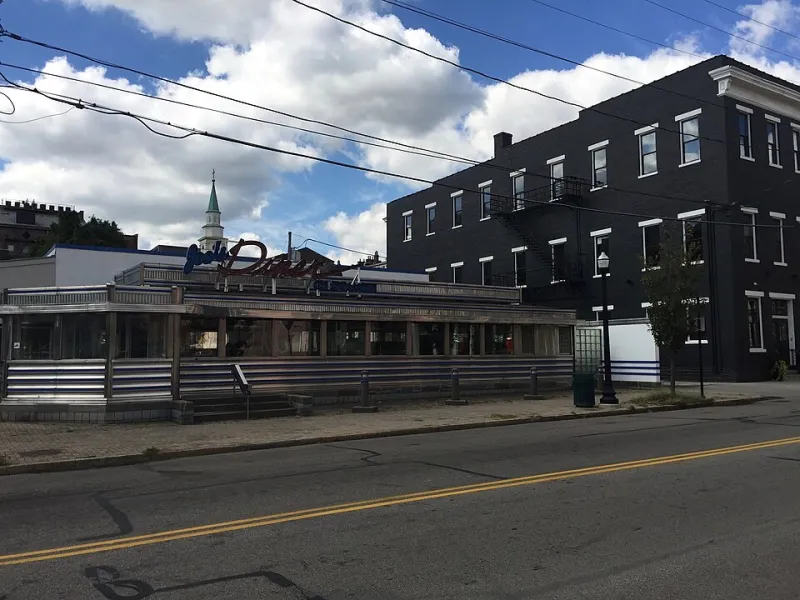
Photo: Warren LeMay from Cincinnati, OH, United States, CC0, via Wikimedia Commons
The machine at the grocery store says unexpected item in bagging area the way a disappointed parent says your full name. It has never once called me hon. It has never asked if I found everything okay, never commented on the weather, never told me to have a blessed day. It just waits, glowing, for me to figure out where the barcode is hiding on a bunch of cilantro.
And yet here I am, every Sunday, scanning my own groceries like I work there. Which, in a way, I now do.
The Word That Raised Me
I grew up in a house where strangers loved you out loud. The waitress at the diner near my grandmother's church called every woman hon and every man sweetheart, regardless of age, regardless of mood. The barber asked about my mother's hip before he asked about the haircut. The guy at the hardware store — a man named Duke whose name tag was older than I was — could tell you which screw you needed by listening to you describe the sound your screen door made.
None of these people knew me. All of them knew of me. I was the kid with the scraped knee, the teenager who mumbled, the college kid home for Thanksgiving. That's a kind of knowing that doesn't show up in a loyalty program.
I didn't realize it was a language until I stopped hearing it.
The Great Flattening
Here's what nobody mentions when we talk about efficiency: the app that remembers your order also forgets your face. The kiosk is faster. The kiosk is also indifferent to whether you survived your week.
There's a term sociologists use — third places — for the spaces that aren't home and aren't work, where community happens sideways. Ray Oldenburg coined it back in the eighties, and he'd probably weep into his coffee if he saw what we've done with the concept. The barbershop, the diner counter, the hardware store with the creaky wooden floors — these weren't just businesses. They were the places where you practiced being a neighbor.
Now the third place has been replaced by the third screen. I order my coffee from a phone, pick it up from a shelf, and the only human interaction is a brief, apologetic collision of eyes when I take the wrong cup. (It was the wrong cup. I'm sorry, whoever ordered the oat milk.)
The Holdouts
So I went looking for the last of them. The chatty ones. The people still doing the ministry of small talk in an economy that has decided it's a bug, not a feature.
In Dayton, Ohio, I met a diner waitress named Charlene who has worked the breakfast shift at the same chrome-sided joint for thirty-one years. She calls everybody hon, and she means it in the most non-denominational, universally applicable way possible. "You get regulars," she told me, refilling a coffee she'd already refilled twice, "and you get to know when something's wrong before they say it. Man orders two eggs over easy for nine years, then one Tuesday he orders pancakes? Something's wrong. You ask."
Show me the algorithm that catches that.
At a family-owned hardware store outside Akron, a clerk named Ray (every hardware clerk is named Ray, I've decided) told me he answers maybe forty questions a day that a website could answer faster. "Sure," he said. "But the website doesn't tell you you're holding the wrong thing for the right job. And it doesn't laugh when you tell it about your gutter."
He laughed when I told him about my gutter. It felt like being seen by a doctor.
What We Actually Traded
I want to be honest: I'm not nostalgic for long lines. I don't miss waiting twenty minutes for a sandwich because the register was having a moment. Convenience is real, and a lot of it went to people — single parents, night-shift workers, anyone whose lunch break is a math problem — who needed it.
But I keep thinking about what the transaction used to contain beyond the transaction. Being called hon by a stranger is a small, weird civic act. It says: you are among people, and we are configured for warmth here. It's a two-second loan of belonging, repaid instantly, no interest.
The kiosk doesn't lend. The kiosk doesn't borrow. The kiosk just wants to know if you're done bagging.
Learning the Language Again
Here's my small, unscientific proposal: the next time a human being scans your cereal, look up. Say something. Comment on the rain. Tell them the cilantro situation at self-checkout is a scam. Be, briefly, the third place for someone else.
Charlene told me the diner's owners are talking about adding tablets to the tables. She shrugs when she says it, the shrug of a woman who has outlived four menu redesigns. "Tablets don't tip," she said. "And tablets don't notice the pancakes."
I left her a good tip and she called me sweetheart, and I walked to my car feeling like a person who was known a little, which is more than any app has ever made me feel.
The machines are faster. But nobody has ever been called hon by a machine, and nobody ever will be. Some words only work when there's a face behind them — and we should probably notice they're going quiet.