Flowers in the Envelope: Corresponding With a Grandmother Who Couldn't Read a Word I Wrote
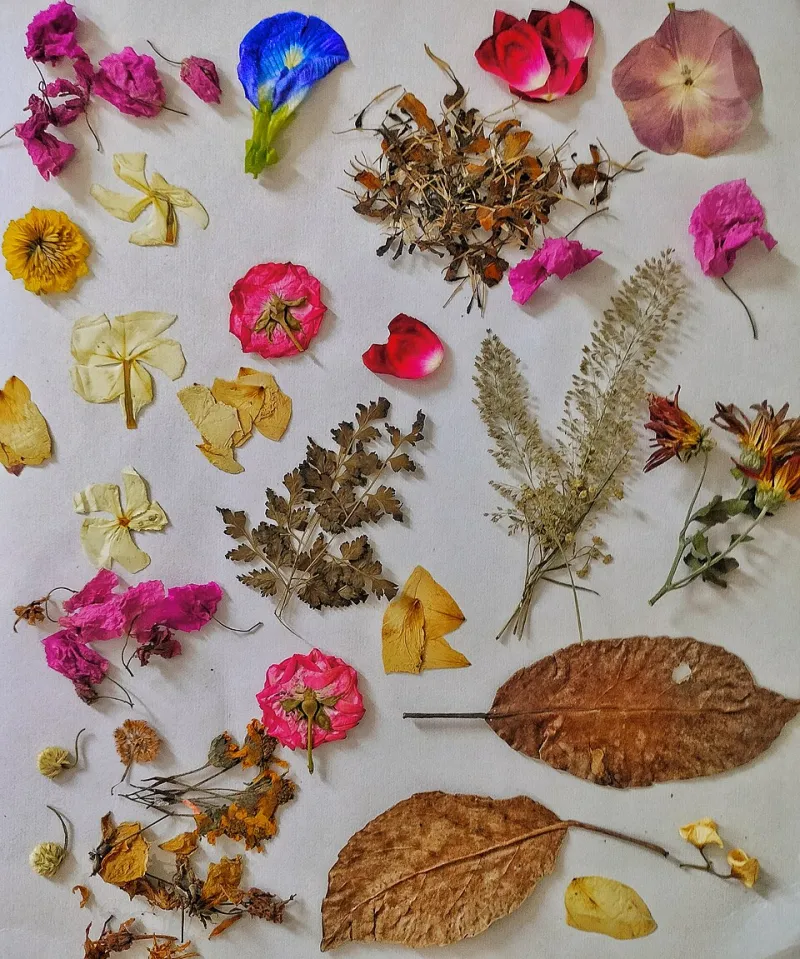
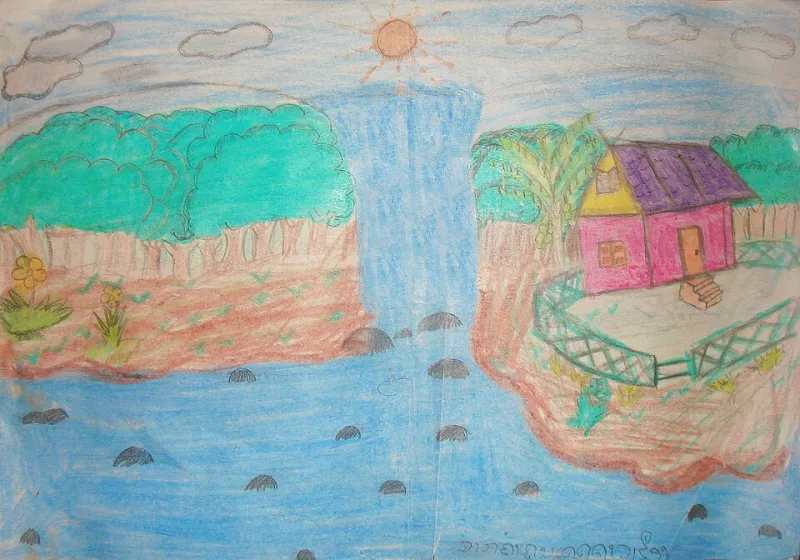
Photo: পাপৰি বৰা, CC BY-SA 4.0, via Wikimedia Commons
My grandmother Nani could not read a single word of English. She could not read Urdu either, or the Punjabi script of her childhood prayers, which she knew only by sound, carried in her chest like a swallowed song. When I left for college in Ohio, everyone told me to write her letters. Everyone assumed that's what you do — distance plus love equals correspondence.
So I wrote them. Every few weeks, a letter. And every few weeks, an envelope came back to my dorm mailbox containing absolutely nothing that could be read.
The Contents of Her Envelopes
The first one held a marigold, flattened to the thickness of a whisper. The second held a drawing: nine stick figures holding hands, one of them wearing what I recognized as my puffy winter coat. The third held a grocery receipt — lentils, cardamom, a brand of biscuit she loved — and on the back, in careful, laborious loops, my cousin had written "Dadi says eat more, you look thin on the phone."
My roommate thought the flowers were sad. I remember her looking at the flattened marigold and saying, kindly, "That's all she could send?"
It took me years to understand that the flower was not a consolation prize. It was the whole letter.
Writing to a Wall of Love
There's a particular loneliness in writing to someone who cannot receive the words. At first I treated it like journaling with extra postage. I told her about my finals, my first snow, the girl in my American Lit seminar who laughed at all the wrong moments. I knew Nani would hand the envelope to a neighbor, or my aunt, and get a summarized version over the phone — "He is fine, he is studying, he says salaam."
But something shifted the day I stopped writing for her and started writing at her, the way you sing to a baby who doesn't understand lullabies. The words stopped being information. They became an object — something she could hold, unfold, smooth flat on her kitchen table, and press under a steel tumbler. I started to suspect she liked the envelopes more than whatever the neighbor translated out of them. The paper itself was the message: I thought of you on a Tuesday in Ohio, and here is the proof.
What the Receipt Taught Me
The grocery receipt broke me open a little, I'll admit. Here was a woman who couldn't read the word "lentils" choosing, deliberately, to send me a document made entirely of text. It was like receiving a love letter in a language you don't speak — except the language was mine, and the love needed no translation.
I taped it above my desk. For a semester, a gas-station receipt from my grandmother hung next to my syllabus, and it did more for me than anything written in the syllabus.
I've started to think our culture has a hierarchy of communication, and it's upside down. We treat the written word as the serious vessel — the memoir, the manifesto, the heartfelt email — and everything else as decoration. But Nani never once sent me a sentence. She sent me texture: petals, ink drawings, the ghost-smell of cardamom on paper. She was fluent in a channel I'd been trained to consider secondary.
The Stories That Won't Sit Still
Here is what those nine years of one-sided correspondence taught me, the thing I keep circling: some stories were never meant to be written down. They were meant to be done to you.
Nani's stories arrived in her kitchen, mid-chore, told in fragments while her hands kept working. The one about the flood of '58 only made sense if you'd seen her gesture the water level against the doorframe. The story of her wedding was mostly laughter, timed like a punchline she refused to explain. When my cousin once tried to write these down — actually transcribe them — Nani got flustered, lost the thread, kept saying "wait, no, that's not how it goes." The page was strangling the story.
Some things are held, not read. Some are sung, badly, off-key, in a kitchen. Some are a marigold in an envelope, meaning I am alive, I am thinking of you, the garden is doing well, come home.
What I Send Now
Nani passed two winters ago. Last month, going through her things, my aunt found a biscuit tin. Inside: every drawing I'd ever scribbled on the backs of my letters — because somewhere along the way, I'd stopped writing paragraphs and started doodling back. Stick figures. A bad cat. The Ohio sky with an aggressive amount of blue crayon.
She'd kept them all. She couldn't read a word I sent, and she'd saved everything.
I still write letters. But I've loosened up about what counts. Last week I mailed a friend a single pressed leaf, no note. She texted: "What does this mean?"
Everything, I wanted to say. It means everything. Read it again.