Clippers, Mirrors, and the Things We Tell a Man With Scissors
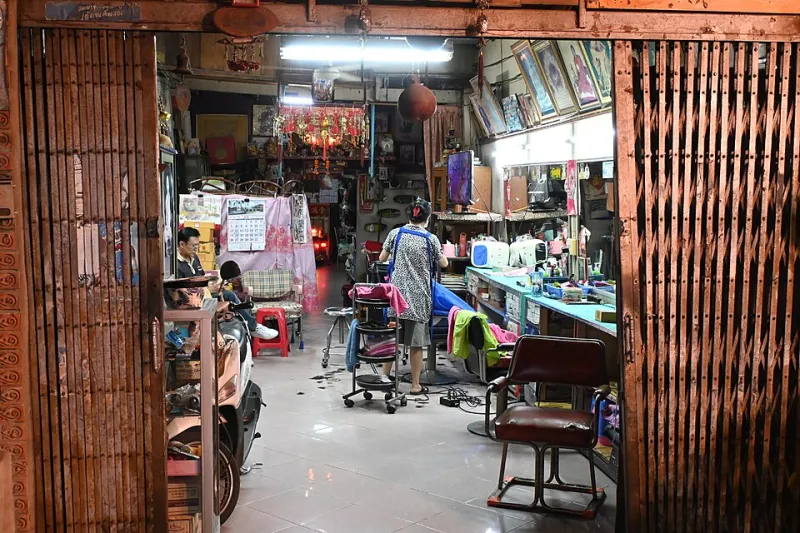
Photo: PattayaPatrol, CC BY-SA 4.0, via Wikimedia Commons
The first time I told Marcus I was thinking about quitting my job, I was sitting in his chair with a plastic cape around my neck and a strip of hair halfway down my forehead. He did not stop cutting. He just looked at me in the mirror and said, 'You want the usual on the sides?'
That is the barbershop for you. You can say something enormous, and the clippers keep humming. Nobody makes a big deal out of it. Nobody asks you to elaborate unless you want to. The chair holds the conversation the way a good bowl holds soup.
I have been going to the same shop for six years. It is a small place on a corner with a neon sign that has been half-broken since before I moved to the neighborhood. Marcus owns it. There are three chairs, a radio that is always a little too loud, and a stack of magazines that nobody reads because everyone is talking. The regulars have opinions about sports, politics, the weather, and the correct way to trim a beard. They also have opinions about each other's lives, which they share freely and mostly kindly.
The Mirror Does Something to a Conversation
There is a reason people talk differently in a barber's chair. You are facing a mirror, but the barber is behind you. You cannot make full eye contact. You are both looking at the same reflection, which means you are looking at a version of yourself while someone else works on you. It is oddly disarming. The mirror gives you somewhere to put your eyes while you say the thing you have been avoiding.
At dinner, you have to look at someone. On a couch, you have to turn toward them. In the chair, you can stare straight ahead and let the reflection do the listening. The barber sees the back of your head. You see the front. Somehow, that arrangement makes honesty easier.
Marcus has heard about my promotions, my breakups, my bad landlords, and the time I thought I had a cavity but it was just a popcorn kernel. He has never once pretended to be my therapist. That is part of why it works. He is a barber. He cuts hair. He listens because listening is part of the job, not because he is trying to fix me.
A Tuesday Trim That Turned Into a Confession
One Tuesday in October, I came in for a trim and ended up telling Marcus something I had not told anyone else. I had been offered a job in another city. It was a good job. More money. A title I had been chasing for years. And I did not want to take it.
I had been carrying that decision around for a week, trying it on in my head like a coat that did not fit. My friends would have asked practical questions. My family would have asked worried ones. My therapist would have asked what I really wanted, which is a useful question and also an impossible one when you are sitting in a chair with a cape around your neck.
Marcus asked if I wanted the usual on the sides.
Then he said, 'You like who you are there?'
I said, 'What do you mean?'
He said, 'At the job. Do you like who you are when you're doing it?'
I sat with that for a minute. The clippers buzzed. The radio played a song I did not know. One of the regulars, an older man named Lou, said, 'That's a good question,' and went back to his newspaper.
I did not have an answer. But I knew the answer was not about money. It was about the person I became when I walked into that building. The job was impressive. The person was tired.
The Regulars as a Choir
A barbershop is not a private room. That is the other thing. You are not alone in the chair. There are other people waiting, other people getting cut, other people pretending not to listen while absolutely listening. The regulars form a kind of choir. They do not always sing the same note, but they are there.
When I finally said I was leaning toward staying, Lou folded his newspaper and said, 'Good. We would have missed you.' It was a small thing. He probably meant it the way you mean it when you say goodbye to someone at the grocery store. But it landed. It was a reminder that I was not just making a decision about a job. I was making a decision about a life, and that life had people in it.
That is what a neighborhood barbershop does that a chain salon cannot. It keeps a record. Not a formal one. Just a living memory of who was here, what they were going through, and whether they wanted the usual on the sides.
Why It Is Easier With Someone Who Never Sees You Outside the Chair
I have wondered why I told Marcus before I told my closest friends. Part of it is timing. You have thirty minutes. You are stuck. The clippers are loud enough to cover a pause. But I think there is something else, too.
Marcus knows me in one specific way. He knows my hair. He knows how I sit. He knows that I hate small talk before coffee and that I always tip in cash. He does not know my resume, my family history, or the name of the person who broke my heart. That narrowness is a kind of freedom. I do not have to be a whole person in the chair. I can be a person getting a haircut who is also trying to make a decision.
There is no follow-up at Thanksgiving. There is no group chat. There is just the next appointment, the same mirror, the same question: 'The usual?'
That is not therapy. It is not a replacement for the people who love us. But it is community, in the old-fashioned sense. It is a room where you are seen, even if the person seeing you is mostly looking at the back of your head.
When I left that day, I looked different. Not because of the haircut, though it was good. I looked different because I had said the thing out loud. The mirror had held it. The clippers had covered it. And Marcus had asked the one question that mattered.
I still have not decided about the job. But I know where I will go when I do.