The Tongue-Bit, the Squint, and the Bathroom Mirror: A Field Guide to My Unposted Face
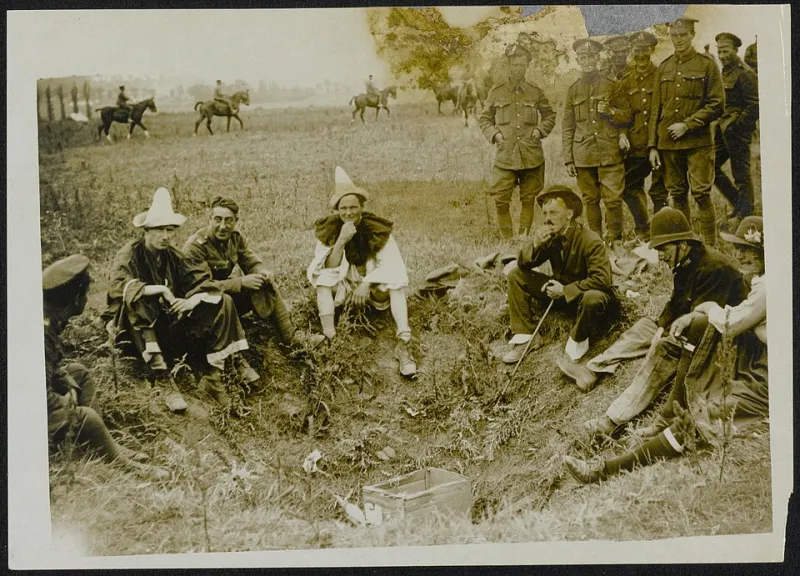
Photo: Nationaal Archief, CC0, via Wikimedia Commons
There is a face I make when I am trying to open a stubborn jar. My tongue slides to the corner of my mouth, my eyebrows knit, and I look personally betrayed by the lid. No one has ever photographed this face. If they did, I would probably delete it. But it is one of the most honest faces I own.
We live in a time of abundant faces. Selfies, video calls, profile pictures, the little circle that lights up when someone is talking. We have more images of ourselves than any generation in history, and yet most of them are performances. The face I make when I am alone—really alone, not alone-with-a-front-camera—is a different creature. It is not for sale. It is not for the feed. It is barely for me. It just happens.
This is a field guide to that face. Not a scientific one. More of a friendly catalog, the kind you might keep in your back pocket and consult when you catch yourself in a window and wonder who that person is.
The Concentration Tongue
This is the face of a person doing a task that requires just enough focus to shut down social awareness. The tongue appears. Sometimes it is a tiny pink comma at the corner of the mouth. Sometimes it is a full diplomatic envoy. I have seen grown adults paying bills, threading needles, and assembling IKEA furniture with the exact same expression my niece wears while coloring outside the lines.
The concentration tongue is not cute, exactly. It is functional. It says: I am not here to be looked at. I am here to make this thing work. In a culture that treats every face as content, there is something almost rebellious about a face that has forgotten it could be seen.
The Mirror Grimace
We do not talk enough about the faces we make at our own reflections when no one else is in the bathroom. The mirror grimace is a diagnostic tool. It is the quick lift of the upper lip to check for spinach. The sideways jaw shift to inspect a new filling. The squint that asks, Is that a pimple or a shadow? The neck stretch that makes us look like a startled turtle.
None of these faces are meant to be attractive. They are meant to gather information. The mirror is not a stage in that moment. It is a lab. And the face is a question: What is going on here?
I have a particular mirror face that involves pulling my chin down and staring at myself like a disappointed aunt. I do not know where I learned it. I do not know what I am hoping to find. But every few days, there it is—a brief, unglamorous audit of the vessel I am walking around in.
The Phone-Scroll Squint
This is the modern face. Chin tucked, eyes narrowed, mouth slightly slack. It is the face of a person reading a headline, watching a video, or trying to determine whether a photo is a real kitchen or a render. The phone-scroll squint is not a look of wonder. It is a look of processing.
What interests me is how quickly this face turns into a kind of trance. The eyes move. The thumb moves. The rest of the face goes quiet. We are making a face at a screen, and the screen is making a face back at us—one algorithmically chosen to keep us there. The gap between who we are and who we post gets a little wider in that glow.
The Kitchen Fork Face
Before we have words for whether the soup needs salt, we have a face. The kitchen fork face is the original review. It is the slight frown, the thoughtful chew, the faraway stare at the spice rack. It is the face of a person consulting their own tongue for expert testimony.
I love this face because it is so useless to everyone else. You cannot post it. You cannot sell it. It is a private conversation between a person and a pot. And yet it is deeply human. It is the face of someone who is still figuring out what they think.
The Face After Sending a Text
This one deserves its own entry. You send a message—an important one, maybe—and then you stare at the screen. Your face does something complicated. Hope, dread, rehearsal, regret. You imagine the other person reading it. You imagine them not reading it. You imagine the exact pause before they reply.
Then you put the phone down and make a face at the ceiling. It is not a pretty face. It is not a calm face. It is the face of a person who has just handed a small piece of themselves to a machine and is waiting to hear what the machine says back.
The Elevator Face
When the elevator doors close and you are alone, your face resets. The customer-service smile drops. The attentive eyebrows relax. The jaw unclenches. For a few floors, you are nobody's neighbor, nobody's employee, nobody's content. You are just a person in a metal box, looking at the numbers.
I think of this as the default face. It is not sad, necessarily. It is not happy. It is the face of a body at rest. And it is probably closer to who we actually are than anything we have ever posted.
Why We Do Not Post These Faces
We do not post them because they are not flattering. But flattering is a low bar. The deeper reason is that these faces are not finished. They are not saying anything. They are not performing an emotion for an audience. They are the raw material of being a person.
Social media has trained us to see a face as a message. But a face is also an instrument. It squints. It grimaces. It sticks out a tongue while opening a jar. It is a tool for living, not just a picture of living.
So here is my invitation. The next time you catch yourself in a window, a mirror, or the dark glass of a phone that has gone to sleep, do not fix your face. Do not smooth it into something postable. Just notice it. That unphotographed face is not the gap between you and the world. It is the part of you that has not been asked to explain itself yet. And that is worth seeing.