The Crossing Guard Knows My Coffee Order: On the Strangers Who Quietly Became Our Landmarks
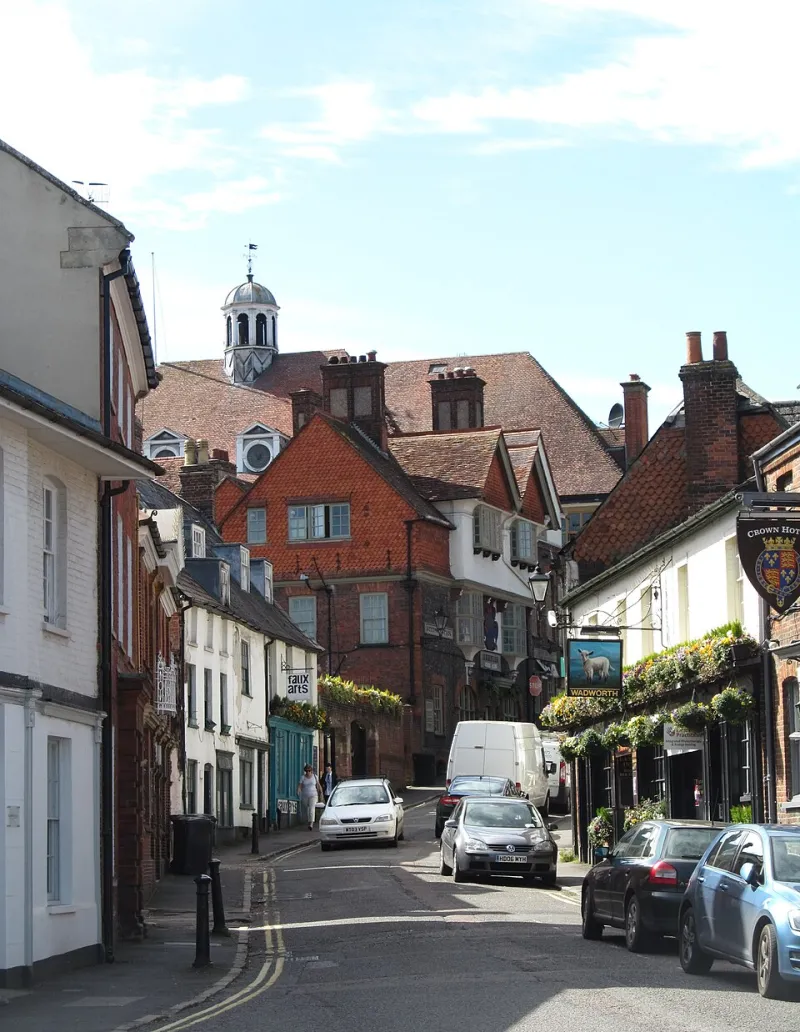
Photo: Gordon Hatton , CC BY-SA 2.0, via Wikimedia Commons
There's a man who jogs past my house every morning at 6:04 a.m. I know it's 6:04 because his arrival is more reliable than my alarm. Gray shorts, headphones the size of small dinner rolls, a nod so consistent I've started calling it a greeting in my head even though we have never spoken.
I don't know his name. I know his cadence.
The People We Never Introduce Ourselves To
Every neighborhood has them. The crossing guard on Maple Street who treats every kid like a celebrity. The barista at the corner shop who remembers your oat milk order and your bad Mondays. The guy at the dog park whose golden retriever is somehow the unofficial mayor of the whole block.
Sociologists have a term for this — familiar strangers — the people we recognize and orbit around without ever formally meeting. But the term feels too clinical for what's actually happening. These people become landmarks. They're how we orient ourselves. The jogger means it's morning. The crossing guard means we made it through winter again.
The Day the Landmark Vanishes
Last spring, my barista — the one who once slid me a free cookie because I looked like I'd been crying in the parking lot, which I had — stopped showing up. No announcement. No farewell tour. I asked the new hire, casually, the way you ask about weather, and got a shrug. Moved, I think. Arizona?
I want to be clear: I was not sad about a cookie. I was sad about being witnessed. For two years, someone had held a small, accurate map of me — the oat milk, the Mondays, the parking lot — and now that map was gone.
There's a specific kind of grief in this. Not the loud kind. The kind you feel slightly embarrassed about, like mourning a tree that got cut down on a street you don't even live on. But these strangers held up parts of our lives. They were the fixed points we navigated by, and nobody warns you that landmarks can leave.
Gratitude, Retroactively
Here's what I've started doing, and I'd recommend it: I introduce myself to the landmarks now. Told the jogger my name. Learned that the crossing guard, Denise, has three grandkids and a laugh that carries across four lanes of traffic. It took six years and one vanished barista to figure out that the distance between stranger and neighbor is about eleven seconds of courage.
Tell Us About Your Unofficial Neighbors
At Chehrak, we believe faces and stories are what make a place feel like home — even the faces we never technically met. So we're collecting yours.
Who is the person you've never introduced yourself to but would notice instantly if they disappeared? The bus driver? The library regular? The woman who waters her tomatoes at dusk like it's a religious ceremony?
Send us a paragraph. Send us three sentences. Tell us their cadence, their coat, their exact time of arrival. We'll be publishing a collection of these unofficial neighbors, because every one of them is a story that lingers — and because somewhere out there, a jogger is nodding at 6:04 a.m., unaware that he's somebody's landmark.