Three Minutes of Her Voice: What We Keep When We Can't Keep Them
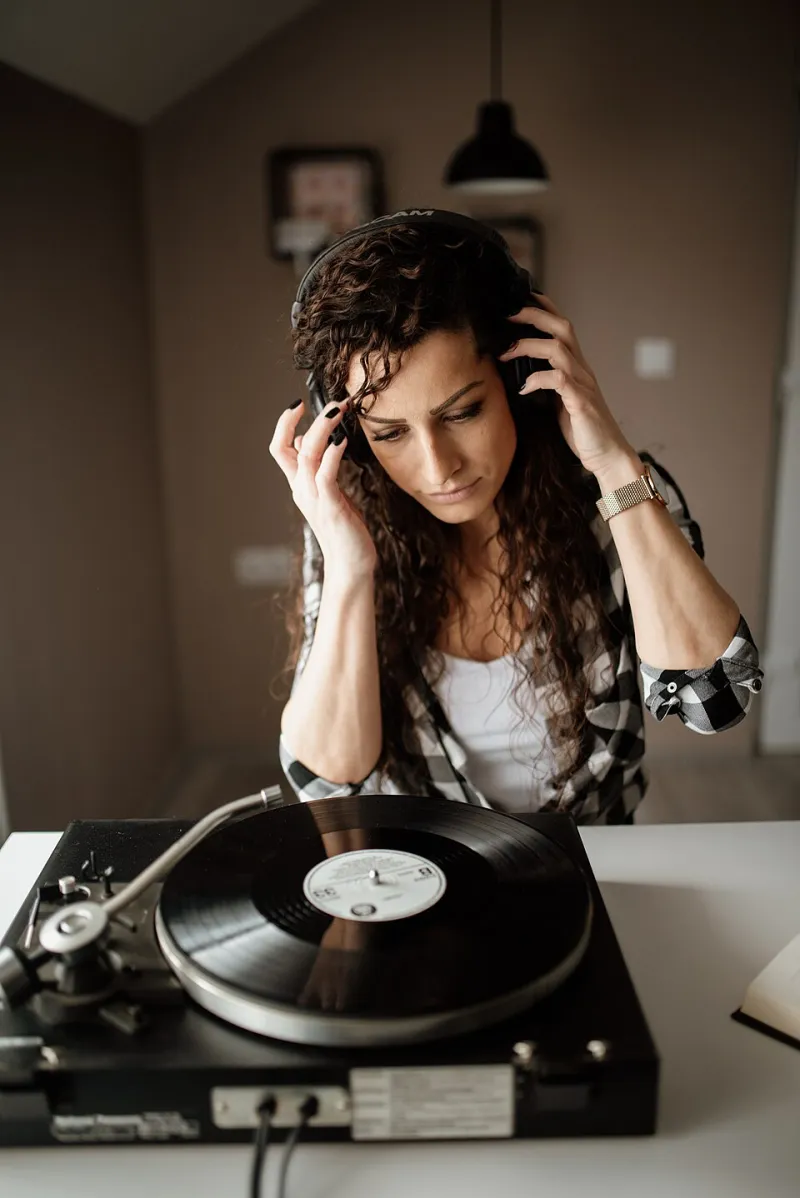
Photo: Shixart1985, CC BY 2.0, via Wikimedia Commons
My mother died in the spring of 2021, which means her phone number has now been reassigned to a teenager in Ohio, and I still know her voicemail greeting by heart. You've reached Diane. Leave it after the beep. Four words and a last name, delivered in the slightly impatient tone she used for anything involving technology.
I didn't save the greeting, technically. You can't. It lives in the carrier's system, on a number that no longer belongs to our family. What I saved is a voicemail she left me in October of 2020, thirty-eight seconds long, mostly about a casserole. But the first two seconds are her saying my name the way only she said it — the second syllable bent upward, half question, half scold.
The Archive Nobody Teaches Us to Build
Nobody handed me a manual for this. There's no section in the grief pamphlet from the funeral home about digital estates. And yet within a week of her death, I had done something instinctive and strangely deliberate: I backed up her texts to a hard drive, screenshotted six years of emails, and transferred that voicemail to three separate devices because I don't trust the cloud the way I trust paranoia.
I've since learned this is close to universal. A coworker keeps a text thread with his father frozen at 2019, the last message a thumbs-up emoji about lawn care. A friend from college has an email from her grandmother with the subject line "re: re: re: funny cat" that she opens maybe twice a year, like visiting a grave she can actually enter.
We are the first generation grieving with archives this complete. Our parents had a shoebox of photos and maybe a letter. We have the entire textual record of a relationship — every inside joke, every "ok drive safe," every 2 a.m. "you up."
Why the Voice Wins
Here's what surprised me: the photographs are easy. I look at pictures of my mother regularly. She smiles out of them, frozen and beautiful and entirely silent.
The voicemail is different. Sound does something a photograph can't. A voice carries breath, hesitation, the little laugh she inserted mid-sentence when she thought she was being funnier than she was. Hearing it is less like looking at a picture and more like standing in a room with the person for half a minute. Neuroscientists talk about how voice triggers recognition circuits that images don't touch, but honestly, you don't need the science. You need the beep.
There's a particular ritual to it, too. I don't listen often. Maybe on her birthday, maybe on a bad Tuesday. And when I do, I put in earbuds, as if the sound of her were something private even from my own kitchen. Grief used to be communal — wakes, sit-shivas, casseroles on doorsteps. Now half of it happens alone, in headphones, at midnight, scrolling.
The Messages From the Living
Not every saved message is about death, and this is where it gets more complicated. I have a thread from a friend who is alive, as far as I know, and simply gone from my life — the slow fade that happens when someone moves to a different city and neither of you does the math on the distance. Her last text to me was a photo of her new balcony with the caption "look at this VIEW."
I have never deleted it. Deleting it would feel like declaring the friendship over, an act of closure I haven't authorized myself to perform. The saved message is a door left unlocked.
I think that's the real function of all of it — the voicemails, the threads, the unopened emails. They're not really memories. They're arguments. Every saved message makes a quiet case: this mattered, this person existed, this connection was real, and I am not the one who ended it.
A Beep for the Modern Age
Last year I told my sister she should record her own kids' voices, just casually, just saying nonsense. She looked at me like I'd suggested something morbid. Maybe it is. But I've started leaving myself voice memos instead of notes, and my husband thinks it's because I'm organized. It's not.
If you have one — a voicemail, a text, a video where someone you love is just talking about nothing — back it up in three places. Not because you'll listen every day. You won't. Because the day you want it, you'll want it exactly, and voices are the one thing photographs can't hold.
My mother's casserole voicemail ends with her saying, distracted, already walking away from the phone, "Okay, love you, bye," to someone else entirely. It's my favorite part. She didn't know she was being recorded for posterity. She was just living, in thirty-eight seconds, and somehow the machine caught it.
That's the whole deal with digital keepsakes, I think. We didn't mean to make them. But they're the closest thing we have to sitting in a room with someone one more time — and unlike a photograph, they answer back, in the smallest possible way, with the sound of a life mid-sentence.