Her Face, My Blank: What the Yearbook Owes Me
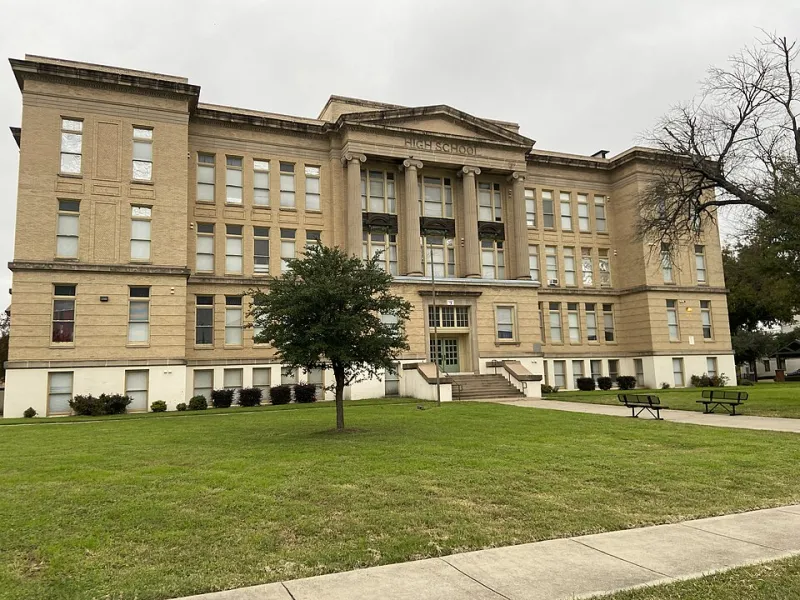
Photo: Myotus, CC BY 4.0, via Wikimedia Commons
The box came from my mom's garage in Ohio, and on top of it, like a dare, was my junior year yearbook.
I hadn't opened it in fifteen years. I told myself I'd flip through a few pages, have a laugh at someone's bowl cut, and put it back. Instead I sat cross-legged on my kitchen floor for an hour, having the strangest experience of my adult life: recognizing every single face and being able to name maybe a third of them.
There was the girl from my chemistry lab. I could see her clearly — the way she chewed her pen, the laugh that came out like a sneeze. Her name? Gone. Absolutely nothing. I wanted to write something in the margin and couldn't even address it to her.
The Guilt of the Blank
It felt oddly like a small moral failure. These people sat three feet from me for a hundred and eighty days a year. Some of them lent me pencils. One of them, I'm fairly sure, defended me in a hallway argument I still remember word for word — and I cannot tell you who he was.
We talk a lot about forgetting people, but we rarely talk about this specific shape of forgetting: the face intact, the name dissolved. It's not that I filed them away carelessly. It's that my brain kept the part of them I looked at and discarded the part I said.
And honestly, once I stopped feeling guilty, that started to seem like a kind of honesty. Faces were the curriculum. Names were just attendance.
Why the Face Stays
There's a reason the asymmetry exists. The human brain devotes an enormous amount of real estate to processing faces — we're built to distinguish thousands of them, to read a mood from half a second of eye contact. Names, by contrast, are arbitrary labels. There's nothing about the word "Ashley" that connects to a person the way a crooked smile does.
Psychologists have a term for a related phenomenon: the familiar stranger — the person you recognize but have never actually met, like the guy at your gym or the woman who waits at the same bus stop. What my yearbook revealed is that most of my classmates were familiar strangers all along. I had hundreds of hours of data on their faces and almost none on their lives.
I knew the girl in the third row of the choir photo had a habit of tucking her hair behind her ear before she sang. I did not know her hopes, her family, her middle name. I knew her look. That was the whole relationship, and apparently that was enough for my memory to keep her on file, nameless, for two decades.
Carrying Someone You Can't Introduce
Here's what unsettled me most, lying on that kitchen floor: these faces are mine now. Permanently. I will be eighty and some version of them will surface in a dream, contextless, unnamed. I'm carrying a museum of portraits with the placards torn off.
And the reverse is certainly true. Somewhere there are people who would recognize me instantly and call me nothing. People I sat next to, waved at, made small talk with about a snow day. I'm a face in their attic too.
Is that sad? I've gone back and forth. On one hand, it feels like a failure of attention — all those hours, and I never once asked a real question. On the other hand, maybe the face is not the shallow part. Maybe noticing how someone held their jaw when they were nervous, or that their smile never reached their eyes in second period, was its own form of knowing. Imperfect, one-directional, but real.
A Small Attempt at Repair
I did what any person with a smartphone and a guilty conscience does: I looked a few of them up. I found the choir girl — she's a nurse in Columbus, posts about her dog, seems genuinely happy. I didn't message her. It felt like showing up at her door to confess a theft she didn't know about.
Instead, I wrote down the names I could recover and left the rest blank. And I've started doing something small and strange at work and at the coffee shop and at my kid's school pickup: I repeat names out loud when I hear them. I ask one extra question. I'm trying, belatedly, to attach stories to the faces I'm clearly going to keep anyway.
Because the yearbook taught me this much: memory is not a fair archivist. It keeps what it wants. The least I can do is give it something worth keeping on both sides of the ledger — the face and the name, the person and not just the picture.